Portfolio
 Home
Home
Pavel Ovchinnikov
Senior Software Engineer | Full-Stack · Backend · IoT · Cloud · AI




Senior Software Engineer with 10+ years of experience building production web applications, backend services, PWA/mobile, IoT platforms, and high load systems. Experienced across the full software lifecycle, from system architecture and APIs to frontend applications, databases, cloud infrastructure, and CI/CD.
My background includes frontend, backend and mobile frameworks, API and communication patterns, relational and NoSQL databases, ORMs, cloud platforms and managed services, containerization and orchestration, CI/CD and infrastructure automation, authentication and authorization systems, caching and messaging, testing, monitoring, and observability. I have worked on both product and enterprise systems, including complex data platforms and applications handling large datasets.
Currently focused on applying this engineering experience to AI-powered products and modern software systems, combining established software engineering practices with emerging AI technologies.
Mentors and leads developers formally and informally. Reviews teammates' code to catch bugs and keep quality high. Writes clear docs, branching policies, and linting rules. Good at detecting issues early using the terminal, curl, logs, and native database queries.
Job titles: Senior Software Engineer, Senior Full-Stack Engineer, Backend Engineer, Product Engineer, IoT Software Engineer, AI Application Engineer
Languages: TypeScript, JavaScript, Python, Java, SQL
Frameworks: React, Next.js, Angular, Vue.js, Node.js, NestJS, Ionic, React Native, React Admin
Databases: PostgreSQL, PostGIS, DynamoDB, Redis, TypeORM, Drizzle ORM
Cloud: AWS, Lambda, RDS, API Gateway, S3, SNS, SQS, Cognito, Amplify, CloudWatch, AWS CDK
Architecture: Distributed Systems, Microservices, Serverless, Event-Driven Architecture, High-Load Systems, IoT, API Design, System Design
AI: Claude, Grok, LLM APIs, RAG, LangChain, MCP
Domains: Browser Extensions, Web3, Crypto
Contact: Email: hello@4life.work, Telegram: https://t.me/js4life, LinkedIn: http://linkedin.com/in/4-life, GitHub: https://github.com/4-life/
2026.05 - present
 Meshintex, Inc.IoT device management platform
 React
React TypeScript
 Python
 Node.js
 PostgreSQL
 Next.js
 AWS
AWS MapboxMCPClaude API
 SentryCI/CD
 Git
GitAt Meshintex, I built a dashboard that works for any kind of IoT setup, with a backend API that takes in live sensor data and designed the data-processing architecture to scale to thousands of connected sensors using asynchronous queues and background processing (SNS/SQS + Lambda). It shows real-time charts and maps with lots of markers on them using MapBox. The API and dashboard are highly customizable and scalable supporting different sensor configurations. Security was a priority the whole way through.
Implemented an MCP-based AI service for automated CI/CD error resolution. The service receives Sentry errors and CI/CD test failures, uses the Claude AI API to analyze errors, retrieves relevant application documentation from Confluence, and attempts to implement a fix in a dedicated Git branch. Also MCP creates Jira tickets with the error description, proposed fix, and links to the branch and documentation. Implemented configurable retry limits and cost controls to prevent excessive AI API usage and runaway automated attempts. Once the pipeline succeeds, the changes are pushed to the branch for developer review, keeping humans in the loop before merging.
Kept the map view smooth with large numbers of sensors on screen, measured by lag-free pan and zoom, by implementing marker clustering.↑ Performance
Kept ingestion fast and stable under bursty sensor traffic, measured by zero dropped readings during spikes, by buffering incoming messages through an SQS queue ahead of processing.↑ Performance
Built role-based auth across the dashboard and API. Hardened the app against XSS/CSRF, and SSRF — sanitizing/escaping rendered input, validating request origins, and restricting outbound requests from the server.↑ Security
Also designed the full architecture for  Lambda Digital, a crypto payment service. Each chain gets watched by its own container, which picks up transactions and sends webhooks to merchants — built with security in mind. On top of that sits a GraphQL API backed by PostgreSQL. Everything runs in Docker and gets built and deployed automatically from one infra repo that manages all the containers. Developed AI assistant bot with RAG and LangChain to help merchants with their questions and issues.
Made each blockchain integration independently deployable and restartable, measured by one chain's outage never affecting the others, by running a dedicated watcher container per chain (EVM, TRON, TON, etc), orchestrated from a single infra repo with health checks and per-service memory limits. ↑ Reliability
Ensured merchant webhooks aren't lost or duplicated under load, measured by consistent delivery during chain re-syncs, by moving webhook dispatch into a dedicated worker backed by a BullMQ/Redis queue instead of firing requests inline. ↑ Reliability
Cut manual deploy steps to zero, measured by every push building and shipping on its own, by wiring up CI/CD that builds each service's Docker image and publishes it to GHCR for the whole container fleet.↑ Dev Speed
Optimized AI bot under free-tier limits by implementing caching and using the Grok model, reducing redundant API requests and overall usage while maintaining a responsive user experience.↓ Cost
2022.07 - 2026.05
 Kupsilla LLCBiotech — cloud lab automation & genetic research
React AngularJSTypeScript
 Sass
Sass StorybookNext.js
 TanStackPython
 Java
Java GraphQLAWSGit
At Kupsilla I worked on a cloud chemical lab automation platform, and a human genetic research application.
Conducted technical interviews for junior and mid-level candidates, performed code reviews, and mentored developers to keep code quality high and support team growth.
Created a GraphQL boilerplate to fast develop MVPs of any complexity quickly with a focus on scalability. Its key feature is a single source of truth for all layers (backend, frontend, database/ORM, swagger/playground)
Worked with Python and Java. While they are not my primary langs, I have used them for application development, integrations, and maintaining existing projects.
Strateos – A Cloud Lab Automation-as-a-Service platform where users remotely run real chemical reactions via robotic systems.
Improved scalability and independent deployability of a large React codebase, measured by separate release cycles per team, by re-architecting the frontend into microfrontends using React, TypeScript, SCSS, and Storybook.↑ Scalability
Increased development speed across teams, measured by reduced duplication of UI work, by building shared UI libraries and publishing them to a private NPM registry used by all microfrontend modules.↑ Dev Speed
Built a complex chemical reaction constructor — a heavy custom UI component that lets users visually design lab reactions — and packaged it as a standalone NPM module to keep the main app lightweight and maintainable.↑ Maintainability
 GeneScience – A web application for searching, analyzing, and visualizing scientific parameters related to human genes. I designed the application architecture and developed complex data visualization components capable of handling large datasets and data-intensive rendering.
Built the application using Next.js with SSR, React, TanStack Query, TanStack Table, and SVG-based visualizations. Implemented efficient data loading and pagination, optimized database queries and data access patterns, and improved rendering performance for complex visualizations and large datasets.
Reduced initial page load time for data-heavy genomic pages by implementing SSR and enabling gzip compression on API responses. ↑ Performance
Kept AWS infrastructure costs within the free tier, measured by zero hosting spend, by deploying on AWS Amplify and managing build-minute usage within free quota limits. ↓ Cost
Built a complex interactive view combining a data plot and a collapsible rows table in one synchronized layout using nivo.rocks, improving data exploration for researchers. ↑ UX
Enabled smooth collaboration across the team, measured by a consistent CI/CD flow for all developers, by setting up AWS Amplify with Amazon Cognito (Google OAuth), linting, testing, and a GitHub branching policy from scratch. ↑ Team Flow
2021.05 - 2022.07
 Strata K.K.Video training platform
Next.js NestJSPostgreSQL
 TypeORMAWSAuth0MUX
At Strata I worked on a video training platform for North American users. Stack: Next.js, NestJS, PostgreSQL, TypeORM, Auth0, AWS Lambda, MUX.
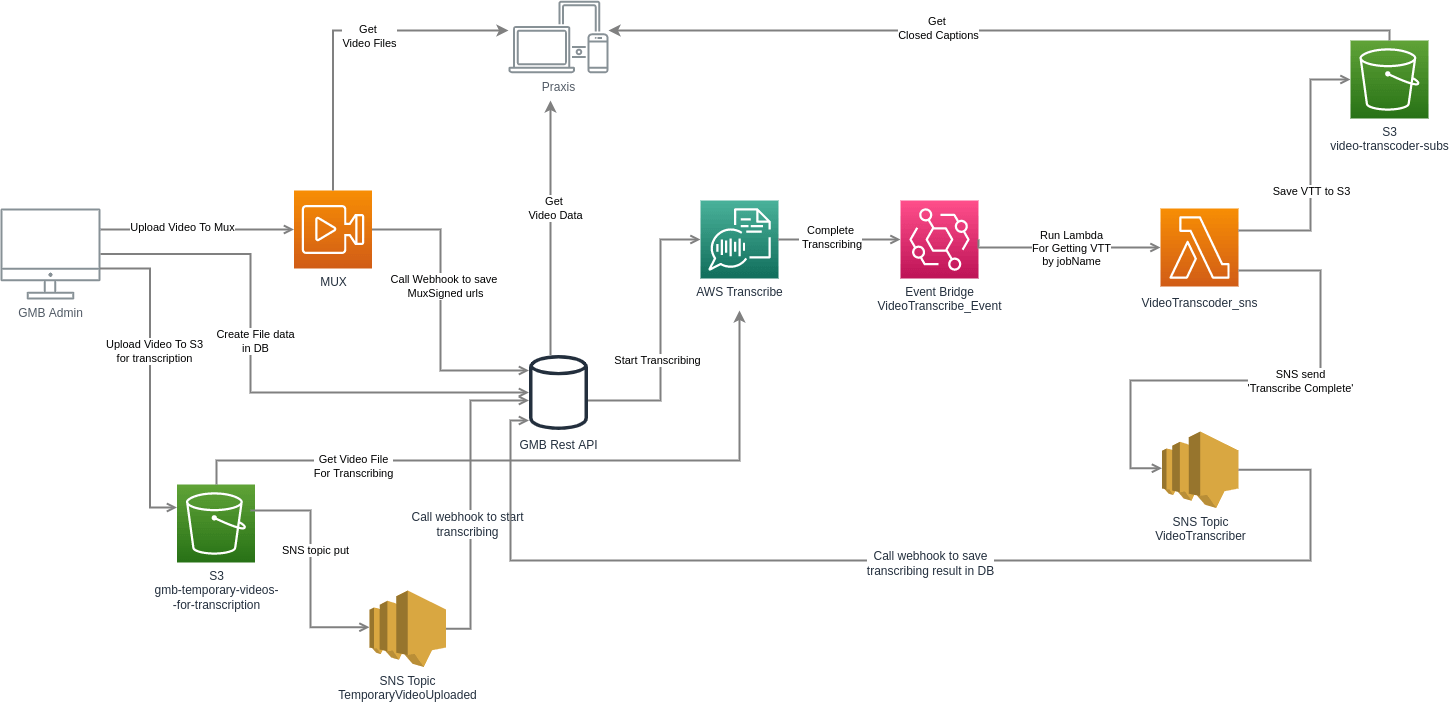
Improved video streaming quality across a wide range of devices, measured by reduced buffering and format errors, by implementing automatic platform detection that selects the optimal video codec and resolution for each client. ↑ Video Quality
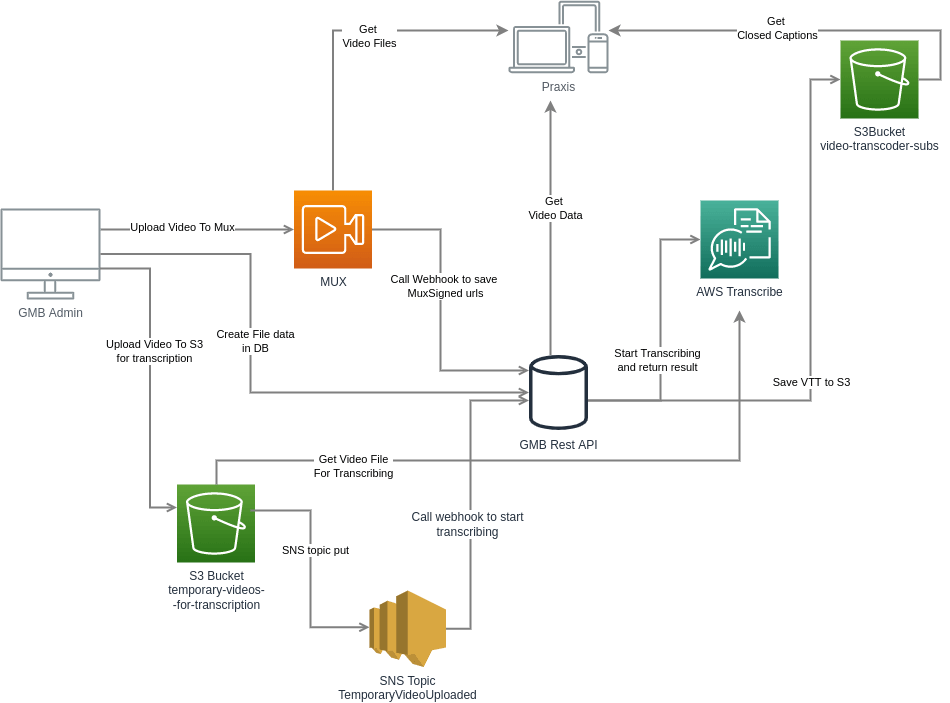
Reduced the maintenance cost of the video upload pipeline, measured by the number of AWS services needed to operate it, by simplifying the microservice architecture and removing redundant steps. ↓ Ops Cost
Previous flow
Simplified flow
Maintained and enhanced an admin panel built with React Admin, improving application performance and optimizing data-intensive workflows. Refactored existing code and architecture, upgraded core libraries and dependencies, resolved compatibility issues, and introduced improvements to maintainability, stability, and overall user experience.
2018.07 - 2021.04
 Nwave Technologies Ltd.IoT — smart parking sensors
AngularJSReactTypeScriptAWS Google Maps
 Ionic
Ionic Capacitor
At Nwave, an IoT company building smart parking sensors for UK clients, I worked as a Full Stack Web Developer on both frontend and backend systems managing 20,000 IoT devices.
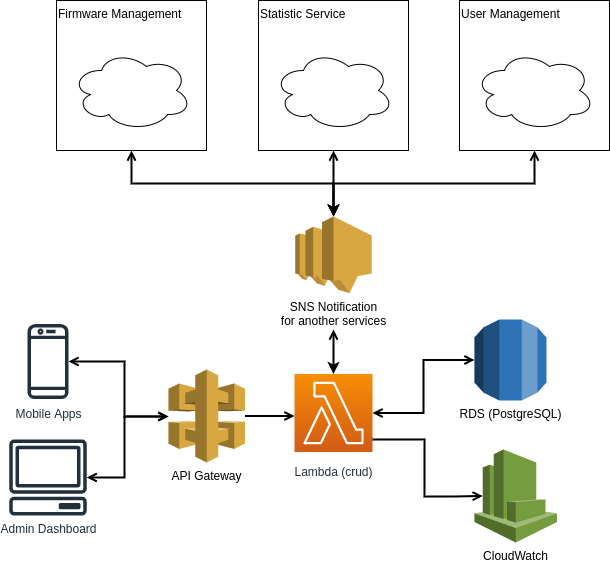
I designed and developed a new REST API service for device management, using PostgreSQL on AWS RDS, API Gateway, AWS Lambda, Amazon SNS, CloudWatch, Swagger/OpenAPI, and automated client code generation. I designed the infrastructure and deployment pipeline using AWS CDK with TypeScript, supporting multiple environments and automated deployments. I also analyzed infrastructure costs and optimized the architecture using the AWS Pricing Calculator to reduce operational expenses.
On the frontend, I developed an administrative dashboard for managing IoT devices and monitoring sensor statistics using React, React Charts, and Google Maps. I also upgraded the company's mobile application to the latest Ionic version and migrated the app to Capacitor.
Built a REST API service handling full CRUD operations for 20,000 devices, achieving 99% test coverage, by implementing it with AWS Lambda, Node.js/TypeScript, PostgreSQL (PostGIS), AWS API Gateway, and AWS Cognito, tested with Mocha, Chai, and the AWS SDK. ↑ Reliability
Improved infrastructure stability and enabled repeatable environment deployments, measured by one-command infrastructure setup, by adopting AWS CDK as infrastructure-as-code — replacing manual cloud configuration with version-controlled, reproducible stacks. ↑ DevOps
Improved rendering performance of 20,000 map markers in the
 SPlace PWA mobile app, eliminating lag on low-end devices, by implementing marker clustering, removing unnecessary recalculations, and optimizing the Ionic/Angular rendering pipeline. ↑ Performance
Architecture diagram that I developed
2017.05 - 2018.06
 AdGuardAd blocker and browser extensions
 JavaScript
 Vue.jsVuexPostCSS
At AdGuard, one of the most popular ad blockers, I contributed to both the main product and additional browser extensions, written in JavaScript (ES6):
An extension that helps users read website content hidden behind ad-blocker detection walls (not deployed, available in a repository).
Contributions to AdGuard Assistant (repository).
Also worked on the front-end of the AdGuard website using Vue, Vuex, and PostCSS.
2013.05 - 2017.05
Worked as a Junior and Middle Web Developer for several companies, building and maintaining websites using PHP, WordPress, JavaScript, and jQuery. Started working with modern JavaScript frameworks, including Angular 1, and built single-page applications. Gained experience with real-time features using WebSockets and created interactive SVG animations for various projects. Automated build and deployment processes using Grunt and Gulp, which improved development consistency across environments.